

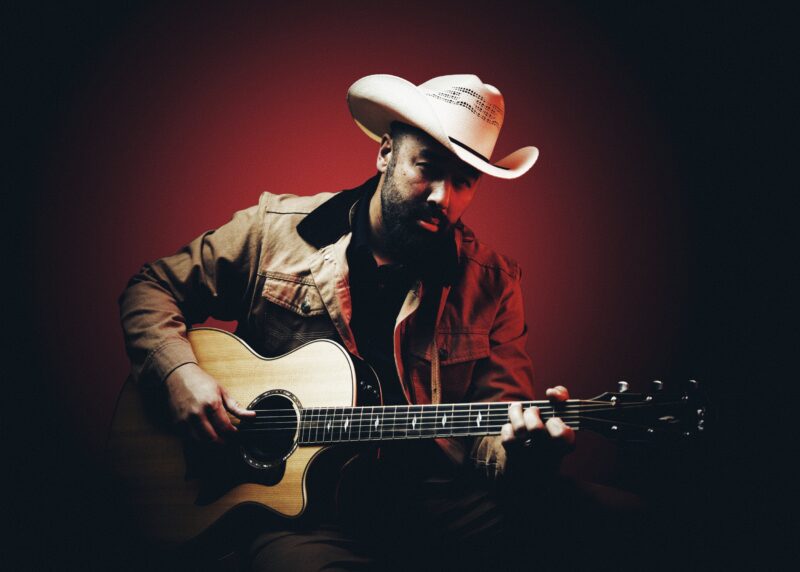
Country music has a long tradition of artists reinventing themselves, and Joe McMinn (Eta Kappa/James Madison 2000) is no exception. After beginning his career in R&B, navigating an industry transformed by the digital age, and ultimately finding his home in country music, McMinn has built a career on authenticity, adaptability, and connection, which recently earned him the title of Vocalist of the Year at the 11th Annual Josie Music Awards. In this Behind the Badge Q&A, McMinn reflects on rebuilding Eta Kappa Chapter, the lessons from his Theta Chi collegiate experience he still carries with him today, and why staying grounded has become both his greatest strength and his defining sound.
Q: First of all, tell us about “Barefoot Joe.” Where did the name come from?
A: I’ve always done music, and over the last 12 years I started leaning into country. For a while, I actually walked away from music. Then one day I was on a beach, took a photo with my feet in the sand, and something just clicked. When I get onstage, I kick my shoes off. Part of that comes from my Korean heritage—getting comfortable and staying grounded. It makes the stage feel like home. When I was choosing a new stage name, “Barefoot Joe” just fit, and it stuck.
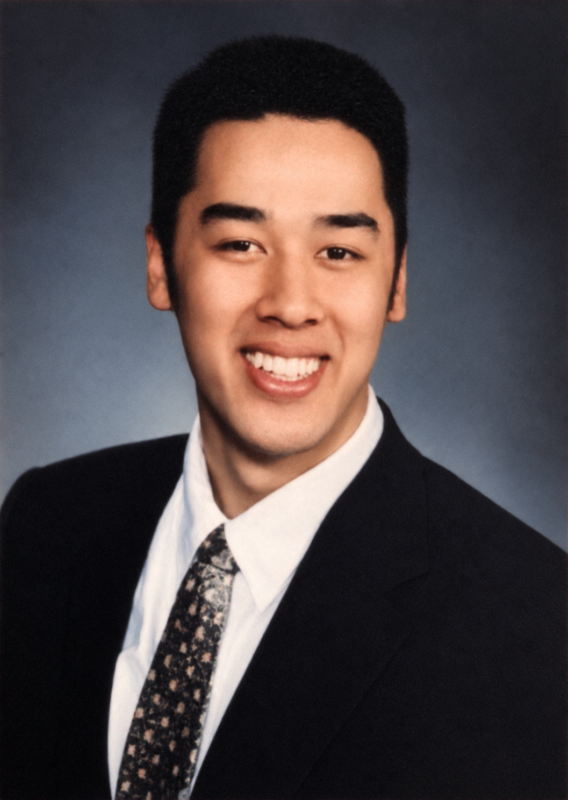 Q: Looking back at your time at JMU, what version of you joined Eta Kappa Chapter, and what version walked out?
A: In a lot of ways, I was the same person going in and coming out, but I left a lot more mature. There was real camaraderie in that chapter. When I joined, there were only six members, and my pledge class was six—so we doubled the chapter overnight. I was a junior and pledged with another junior, a sophomore, and three freshmen. After I was initiated, I immediately became Secretary because we were so small, and we got the chance to rebuild something that had dwindled to a low number. We had a strong group of guys who truly cared, and I’m grateful to see the chapter still thriving today.
Q: What are your memories of Greek Sing at JMU and why was it so important to you?
A: Every brother has a strength that brings value to the chapter. When the opportunity to lead my chapter in Greek Sing arose, I knew my number was called, and I knew that, as a chapter, we had a tremendous opportunity to redefine the perception of Theta Chi at JMU. I remember distinctly having a very clear vision of what we were going to do, and I was quick to pick Sisqo’s “Thong Song” for our Greek Sing performance. No one knew at the time that it was going to be a huge hit, so we were ahead of the curve. I remember spending hours choreographing a dance routine and pulling together my brothers to learn and practice it. Most of my brothers had never danced a day in their lives, so it was incredible to see them working so hard to learn it; it was a true bonding experience.
Q: What impact did it have on a chapter that was rebuilding?
A: We were in the third year of a rebuilding phase, growing from only six members to about 20. On the day of Greek Sing, we were the underdogs. No one really knew who we were, but we were confident and proud of the production we worked so hard to put together. Ultimately, we put on a show that no one expected and came away as Greek Sing winners! It was a surreal and proud moment! I remember seeing random people reenacting our dance routine as I was walking back to the chapter house that night. I believe that our performance that night truly marked Eta Kappa’s return as a premier Greek organization at JMU. And it exemplifies how you can rebuild a chapter quickly when you start with a solid foundation of high-character brothers with the drive to make their mark on the world!
 Q: What did Theta Chi give you that you still lean on today?
A: The Helping Hand and the sense of community. Those are things I still carry. I remember being in school and always giving back—whether through service or philanthropy—and even now, I’m still overjoyed when I get the chance to be of service.
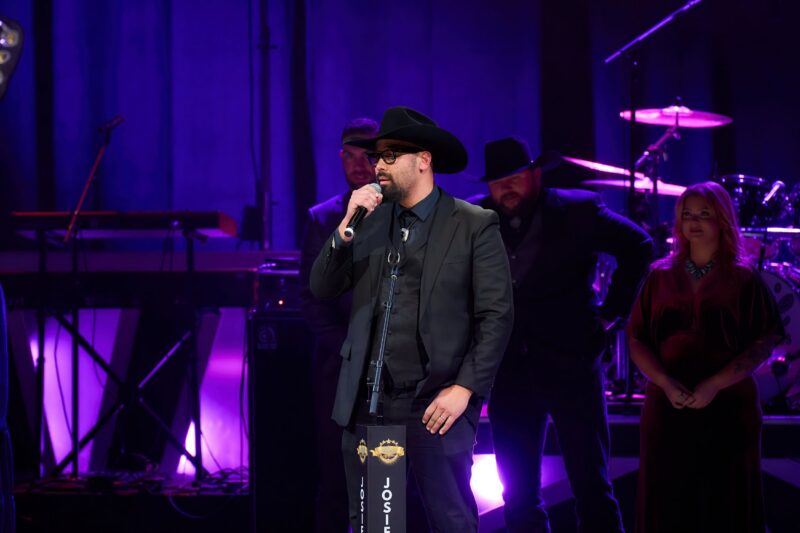
Q: You just won Vocalist of the Year at the 11th Annual Josie Awards—when you heard your name, what flashed through your mind?
A: Honestly? I was tired. We’re in and out of Nashville all the time, recording and playing shows, so I was exhausted. I got up to grab popcorn, and when I came back to my seat, they called my name. It was a category I truly wasn’t expecting to win, so it was a genuine surprise. After that initial shock, it hit me: it was a tremendous honor and a humbling experience. Tens of thousands of people get nominated for those awards, and very few ever win.
Q: When did music stop being “something you like” and become what you do? Was there a moment where the path narrowed?
A: Music has always been something I did, so it’s hard to pinpoint one moment. But right out of college, I signed a production deal. At the time, I was doing more R&B with a group called Bling Dynasty—we even played at Michael Jackson’s 45th birthday party. Then Napster happened, the industry shifted, and a lot of companies went out of business, so we had to pivot.
Q: What are the similarities between R&B and country that people don’t assume?
A: They’re like estranged brothers. They share a lot of the same origins, and most people don’t realize that. The chord progressions, the historical context—there are more similarities than differences.
Q: What’s the part of being a songwriter most people don’t understand?
A: For me, the song comes before me as the artist. It’s like your baby—you want people to hear it and experience it the way you do, and you want it to succeed. But in a world where attention spans are much shorter, it’s harder than ever to break through and make a song truly land.
Q: What do you want a listener to say about you after a show that has nothing to do with your voice?
A: I’d love for them to follow my music or add me on social media. What I’m trying to build requires a community around it—people who buy in and come along for the journey. You’d think it would be easier nowadays, but it’s not. Sometimes it feels like pulling teeth. Word-of-mouth is still where I get the most impact.
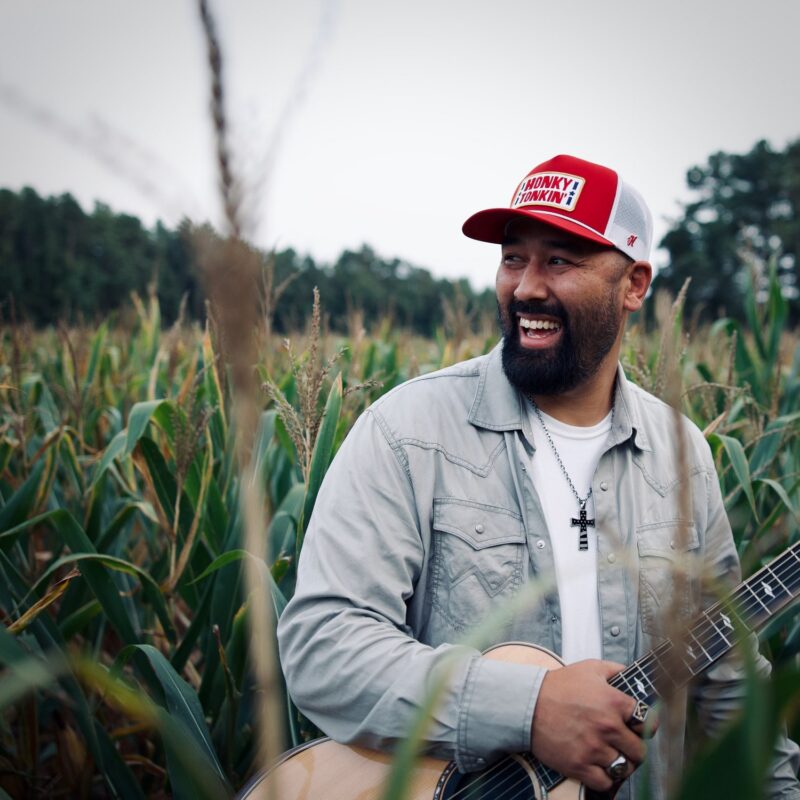 Q: In your opinion, what’s the difference between a good show and a great one?
A: A good show might be one where you get paid decent money. A great show is where people are fully engaged, having a great time, and you walk away with new fans—people who become invested in what you’re doing. If you can reach one person who didn’t know you before, and they become a lifelong fan, that’s a great show.
Q: Your self-titled debut dropped in 2023. What’s your favorite memory from recording it—and what song still resonates the most with you?
A: “Just Plain Crazy.” It’s my favorite song on the album—and I think it might be my fans’ favorite, too. It was the first song I ever took to radio, and it reached the Top 100 on the MusicRow charts. For a new, unestablished artist that nobody knew, that was a huge moment. It was also one of my first co-writes in Nashville. When we wrote it, I knew it captured my defining sound: R&B bones with a country feel. It’s easily been the most influential song of my career so far.
Q: Every artist hits a wall—a “no,” a dry season, a moment where quitting feels rational. What’s been your toughest stretch, and what kept you going?
A: Last year, I went in with the mindset of, “No one is going to outwork me.” And I learned you can work hard and still burn yourself out. I doubled my output, but it came at a cost—my health and my relationship at home with my family. I had to learn balance. The thing that keeps me grounded and motivated is my relationship with God. He gave me this talent and the ability to write these songs. Trusting Him is everything, and it’s also about perspective. It’s a blessing to be able to put my art out there for hundreds of thousands of people. Without Him, none of that would be reality.
Q: You’ve seen the industry from the inside now—what’s one lesson you wish you could give your younger self?
A: The biggest thing is: you have to be agile. The industry is constantly changing. Even if I could go back and tell my younger self something, it wouldn’t matter much—I can’t see the future. The industry changes, the audience changes, the direction of music changes, the algorithm changes. Success comes down to how well you adapt. All you can do is put one foot in front of the other and keep moving.
Today, as an award-winning recording artist, husband, father, and active member of his community, McMinn continues to live those values, reminding us that success isn’t about following the same road, but having the courage to take the next step. McMinn’s story is about more than music; it’s about remaining grounded while embracing change, finding purpose through service, and having the resolve to keep moving forward no matter how the path evolves. From rebuilding his chapter at JMU to reinventing himself in one of the country’s most competitive industries, he has demonstrated the adaptability, perseverance, and character that define a Resolute Man.