

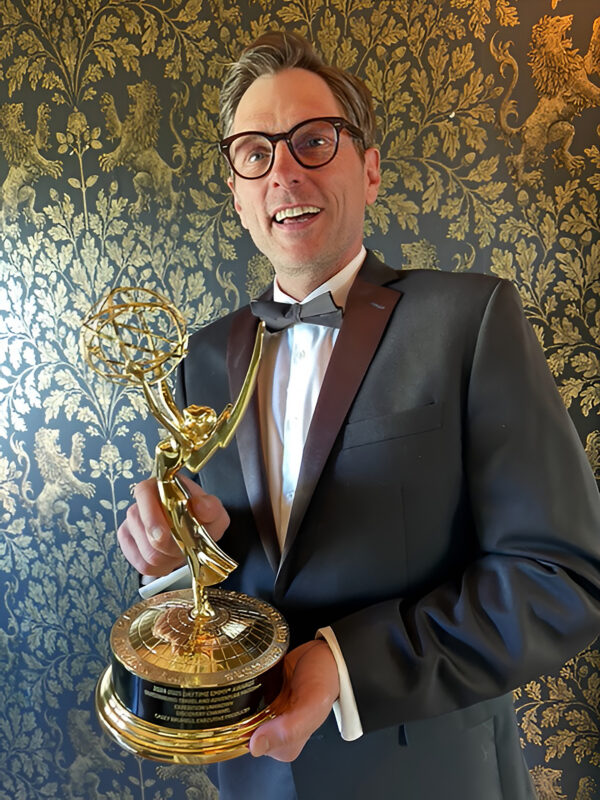
 Casey Brumels (Beta Zeta/Michigan State 1998) didn’t come to Michigan State with a perfectly mapped-out plan. Instead, he came with ambition, a love of sports, and an openness that would let life surprise him. As co-owner of Ping Pong Productions, Brumel’s extensive work in television has spanned nearly two decades, helping to create popular shows on networks such as TLC, Travel Channel, Discovery, and Sci-Fi Network, including Destination Truth, Expedition Unknown, Dr. Pimple Popper, Ghost Nation, and more. In this Behind the Badge Q&A, Brumels reflects on the small-town roots that shaped him, the true friendships he found at Michigan State, and how his Theta Chi experience helped sharpen the resolve he still leans on today—whether he’s building community with brothers decades later or leading award-winning work in television production.
Q: Where are you originally from, and what led you to attend Michigan State?
A: I grew up on a farm just outside of Grand Rapids, and for a long time, I wasn’t exactly sure what my path forward looked like. Back then, I was much more focused on basketball than on my grades, so school was not a priority for me. I did enough to get by, but let’s just say I was more than a few spots away from being the class valedictorian. Michigan State University had always been part of our family tradition—my grandfather played football for the Spartans—so it was a place I grew up hearing about and rooting for. When I was accepted, I was incredibly excited and, truthfully, felt very lucky given my very average GPA!
Q: What attracted you to Theta Chi?
A: I knew next to nothing about the Greek system and honestly hadn’t given it much thought. But at the prodding of my roommate at the time, I tagged along to check out a few houses during rush—without much expectation that it would turn into anything serious. After visiting a handful of places, we ended up at Beta Zeta’s house and immediately felt a connection with the guys there. As far as fraternity houses go, the house itself was impressive, and their reputation as a dominant sports fraternity stood out. But what really left an impression on me was the range of personalities I met throughout the week. There wasn’t just one type of brother—there were guys from all walks of life—and somehow it all worked.
Q: How has Theta Chi shaped you as a Resolute Man?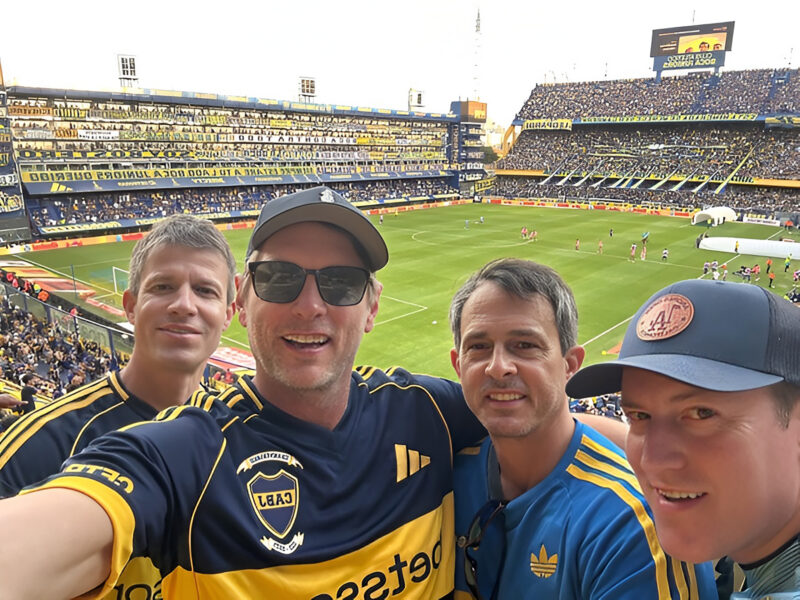
A: Joining a fraternity didn’t just give me a closet full of old T-shirts and a lifetime supply of inside jokes—it quietly turned me into a far more resolute man. Living alongside a group of strong-willed guys taught me patience, thick skin, and the ability to stand my ground.
Brotherhood has a funny way of shaping you at that age—you either grow up or get left behind. I chose to grow up. And while I may joke that I survived on pizza and chaos, the truth is that those experiences forged grit, loyalty, and a steady resolve in me that still shapes how I handle life today.
Q: Which of Theta Chi’s ideals have stuck with you the most from your time as a collegian?
A: The greatest thing I carried with me from my time in the Fraternity wasn’t a title or a memory—it was the lifelong friendships. There’s something about living, struggling, celebrating, and occasionally surviving together that bonds you for good. We saw each other at our best and, more importantly, at our worst—stress before exams, heartbreaks, big risks, and bigger dreams—all while having the time of our lives.
Years later, the distance, careers, and families don’t change the foundation we built. Some 30 years later, we still make a point to get together each summer for golf trips because what started as fraternity brothers became not just lifelong friends, they became family.
Q: What initially intrigued you about the world of television? As a child, do you remember your earliest “favorite show” that you imagine led you down the path you’ve taken today?
A: I was part of my high school’s TV production program and even took a few classes in it while at Michigan State University, but I always assumed I’d end up in marketing after graduation. And for the first few years, that’s exactly what happened—I worked with brands like Reebok and Gatorade, gaining great experience and learning the business side of things.
But life has a funny way of rerouting you. For one reason or another, I found myself in Los Angeles, where I landed a job at MTV working on one of the many dating shows they were airing at the time. Almost immediately, I knew I had found something that fit. The fast-paced world of TV production matched my energy, challenged me in new ways, and gave me the creative outlet I’d been looking for.
 Q: What is your role over at Ping Pong Productions?
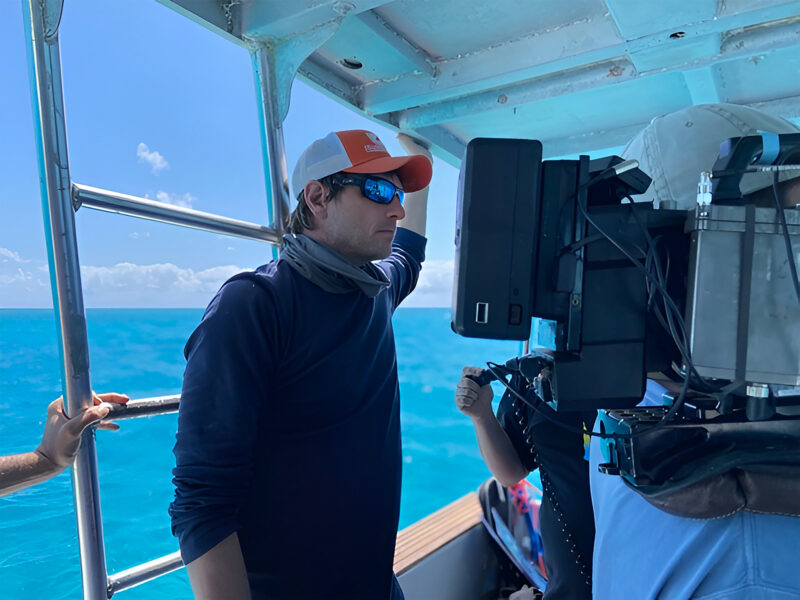
A: I’m the co-owner of Ping Pong Productions and serve as an Executive Producer across all our shows. We founded the company nearly 20 years ago, and over time, have steadily built it into one of the larger independent production studios in the country. What started as a small, ambitious venture has grown into a dynamic, full-scale operation—something I’m incredibly proud to have helped shape from the ground up.
Q: Is this your first Emmy? How did it feel to win it?
A: Yes, this was my first Emmy, and of course, when you receive accolades from your peers is always a good feeling.
Q: What’s been the biggest success at Ping Pong, Josh Gates programming? Dr. Pimple Popper?
A: We’ve been fortunate to have had quite a few hits over the years that really tapped into the zeitgeist. Our first mainstream breakthrough was a show called Finding Bigfoot, which aired on Animal Planet about ten years ago. From regular ribbings by Joel McHale on The Soup to even inspiring an episode of South Park poking fun at the show, we knew it was making waves in the TV landscape.
We’ve also had an incredible 20-year run creating shows with Josh Gates, including Destination Truth and now Expedition Unknown on the Discovery Channel, which audiences just can’t seem to get enough of. And of course, there’s Dr. Pimple Popper—cringeworthy TV that’s impossible to look away from once you stumble across it, which, naturally, we absolutely love!
Q: What’s a piece of advice you’d give a younger Theta Chi who is interested in TV/streaming production as a career, especially with how the field is shifting?
A: Don’t let the critics shake you—keep believing in your product. Along the way, I’ve had bosses and even friends tell me I didn’t have what it takes to make it in this industry, but I never let that stop me. Even if friends or family don’t connect with the programming you’re creating, I promise there’s an audience out there somewhere who will. Stay consistent, keep pushing, and trust the process—good things will come.
From marketing for major brands to landing in Los Angeles and discovering the creative opportunities of television, Brumels’ story is a reminder that progress rarely moves in straight lines and that grit matters just as much as talent does. As he says, keep believing in what you have to offer, stay consistent, and trust the process, because somewhere out there, an audience is waiting to receive it.